
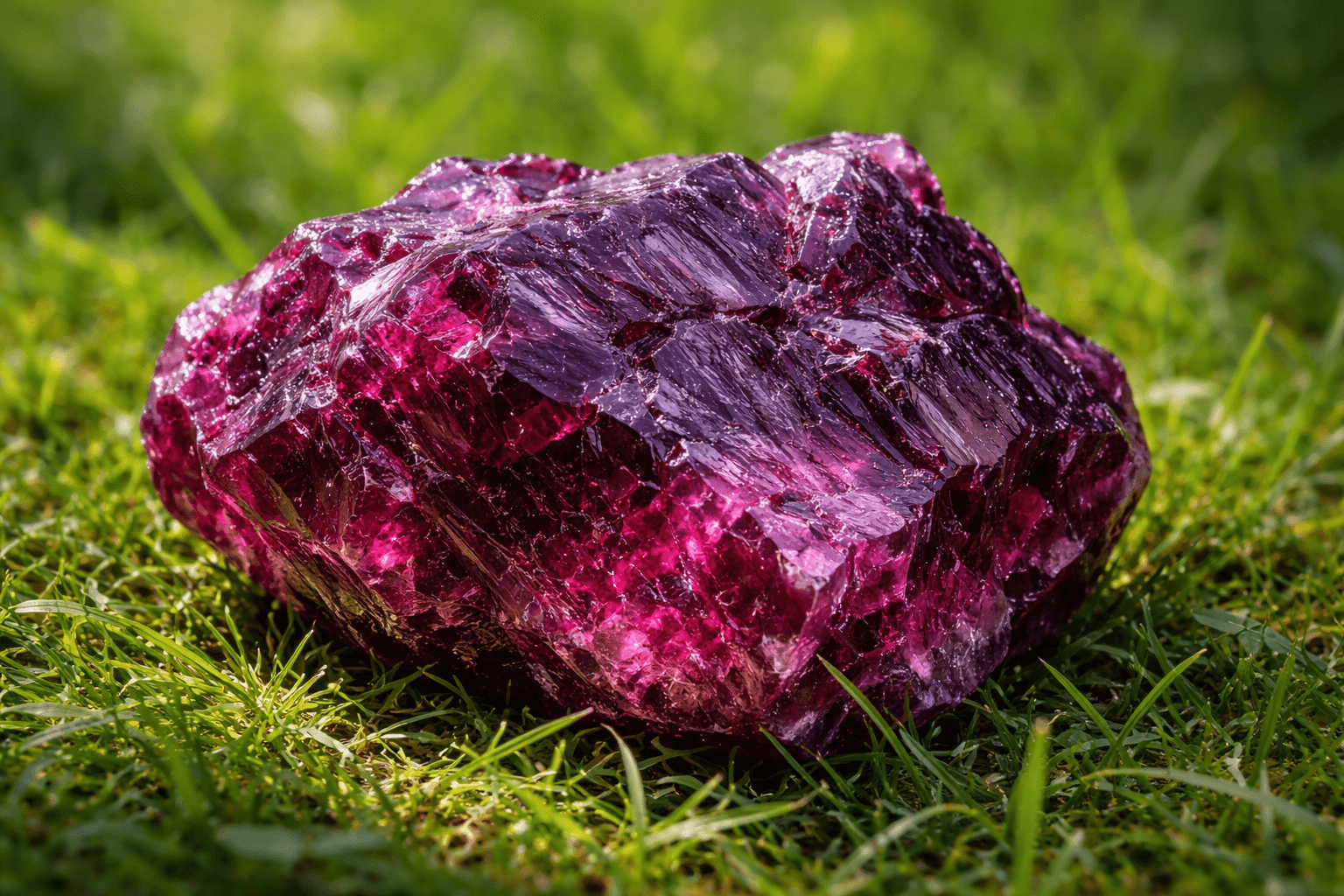
Welcome to the worldwide debut of Malawi Magenta garnet—a groundbreaking gemstone discovery that introduces an entirely new color to the garnet family. This remarkable find brings the first-ever pure magenta hue to garnets, one of the rarest colors in the gemstone world.
What Is Malawi Magenta Garnet: A New Gemstone Discovery
Malawi Magenta garnet is a newly discovered variety of garnet that exhibits a unique magenta color. This natural untreated garnet represents a significant milestone in gemology—it’s the first garnet to display a true magenta hue, blending pink, purple, and red tones with hints of blue.
The Discovery Story: September 2023 in Malawi
The story of this new gemstone discovery began in September 2023 at the Hong Kong gem show. Farmers in Malawi were plowing their cornfield when they noticed unusual macha-colored drops emerging from the soil. These small, vibrant stones turned out to be an entirely new garnet variety. The discovery happened so recently that we’re witnessing history—less than six months passed between the initial find and this worldwide debut.
Mining Location: Neno Region, Malawi
These magenta garnets come from the Neno region in Malawi, a very remote location. This discovery is particularly significant because Malawi has never before produced important gemstones for the international market. This find may create a gem rush in the region, putting Malawi on the map as a gemstone source.
The Unique Magenta Color: Rarest Garnet Hue
The defining characteristic of Malawi Magenta garnet is its cranberry magenta color. This magenta color gemstone fills a gap in the garnet color spectrum that has never existed before. The color combines pink, purple, red, and even hints of blue to create what collectors call “the color of passion.”
Very rarely does a gemstone discovery introduce an entirely new color to a mineral family. The magenta hue increases the collectibility of garnets significantly because it offers something genuinely unprecedented. When you examine these stones, you’ll notice an incredible vibrancy and saturation—a kaleidoscope of red, pink, purple, and blue undertones.
Comparing Garnet Types: Magenta vs Rhodolite vs Grape
To understand what makes Malawi Magenta garnet special, it helps to compare it with other garnet varieties. The magenta garnet sits perfectly between two well-known types: rhodolite and grape garnet.
Rhodolite Garnet: Traditional Red-Pink
Rhodolite garnet displays traditional reddish-pink colors. It leans more toward red and pink tones, representing the classic garnet appearance that most people recognize.
Grape Garnet: Deep Purple Tones
Grape garnet showcases beautiful purple tones, similar to the color of grapes. This variety emphasizes the purple end of the garnet spectrum.
Magenta Garnet: The Perfect Middle Ground
Malawi Magenta garnet bridges the gap between rhodolite and grape garnets. It captures the best of both worlds—not too purple like grape garnet, and not too red like rhodolite garnet. This positioning creates tremendous value because the color is genuinely distinct.
When you place all three types side by side, the difference becomes immediately apparent. Some vendors try to sell regular rhodolite as magenta garnet to increase value, but the visual comparison reveals the truth instantly.
Color-Shifting Properties: Daylight to Incandescent
An exciting hidden feature of Malawi Magenta garnet is its color-shifting ability. The gemstone absorbs different light spectrums, which shifts the color reflection depending on your lighting environment.
Under daylight or bright white light, the garnet displays deeper purple tones. The blue and purple undertones become exaggerated, moving the appearance closer to grape garnet territory.
Under incandescent or warm light, the gemstone shifts toward warmer tones. You’ll see more pink and blush undertones emerge, resembling rhodolite garnet more closely.
This color shift means the gemstone adapts to your environment. At a candlelit dinner, it presents one personality. In bright sunlight, it shows another. The stone literally changes with your mood and setting.
Natural and Untreated: 100% from Mother Nature
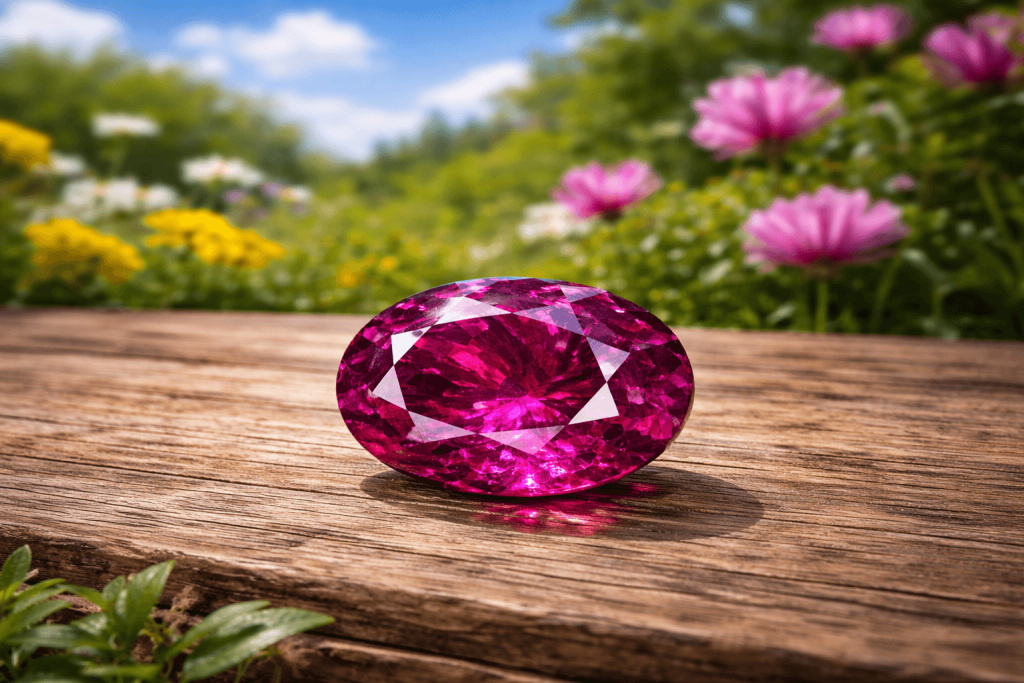
One of the most important facts about Malawi Magenta garnet is that it’s 100% natural. In 90-95% of cases, garnets cannot be treated to enhance their color. Demantoid might be the only exception to this rule.
What you see is exactly how these stones emerged from the ground. The rough material displays the same magenta color as the faceted gems. There’s no heat treatment, no irradiation, no enhancement of any kind. Mother Nature created these garnets in their finished color.
This natural characteristic adds significant value and authenticity to the gemstones. Collectors particularly appreciate knowing that the color will never fade or change because it’s intrinsic to the stone’s crystal structure.
Rarity and Production: Understanding the 1-2% Yield
From 200 Kilos of Rough to Gem-Quality Stones
The question “how rare is magenta garnet?” has a dramatic answer. Out of approximately 200 kilos of rough material mined so far, only 1-2% qualifies as gem-quality magenta garnet. The remaining 98-99% consists of large purple boulders that are completely fractured or included—unusable for faceting.
To put this in perspective, the mine moved about 2 tons of host rock to produce 200 kilos of rough. From those 200 kilos, only a few kilos became gem-quality magenta garnets. The production rate is incredibly low.
The size range presents another limiting factor. Approximately 99% of the rough material measures the size of small pebbles or smaller. The largest specimens shown here represent the absolute best and biggest from the entire production. Finding larger pieces is extremely rare.
When you factor in the cutting loss, the numbers become even more striking. Rough garnets lose about 80% of their size during faceting. A piece of rough must be substantially larger than the finished gemstone you want to create.
Garnet Durability: Perfect for Everyday Wear
Garnets measure 7.5 on the Mohs hardness scale, making them durable enough for daily wear. You can confidently wear magenta garnet in rings, earrings, or pendants without worrying about scratching or damage during normal activities.
The cubic crystal system of garnets offers another advantage. Unlike gemstones with pleochroism, garnets display consistent color from every viewing angle. Cutters don’t need to worry about crystal axis or orientation—they can position the table wherever needed, and the color remains uniform.
This property also means smaller garnets retain their saturation. With pleochroic gemstones like tanzanite or amethyst, smaller sizes often appear washed out or muddy. Magenta garnets hold their vibrant color even in tiny sizes, making them versatile for various jewelry applications.
Malawi Magenta Garnet Key Facts
- Discovery: Found September 2023 in Neno, Malawi by cornfield farmers
- Color: First-ever pure magenta garnet—blends pink, purple, red, and blue
- Rarity: Only 1-2% of mined material qualifies as gem-quality
- Treatment: 100% natural and untreated straight from the earth
- Color shift: Changes from purple tones in daylight to pink tones in incandescent light
- Durability: 7.5 Mohs hardness, suitable for everyday jewelry
- Production: Less than 6 months from discovery to market availability
- Crystal system: Cubic, meaning no pleochroism and consistent color from all angles
